Phone: +91 9567863498
 Email: mail@elinaut.com
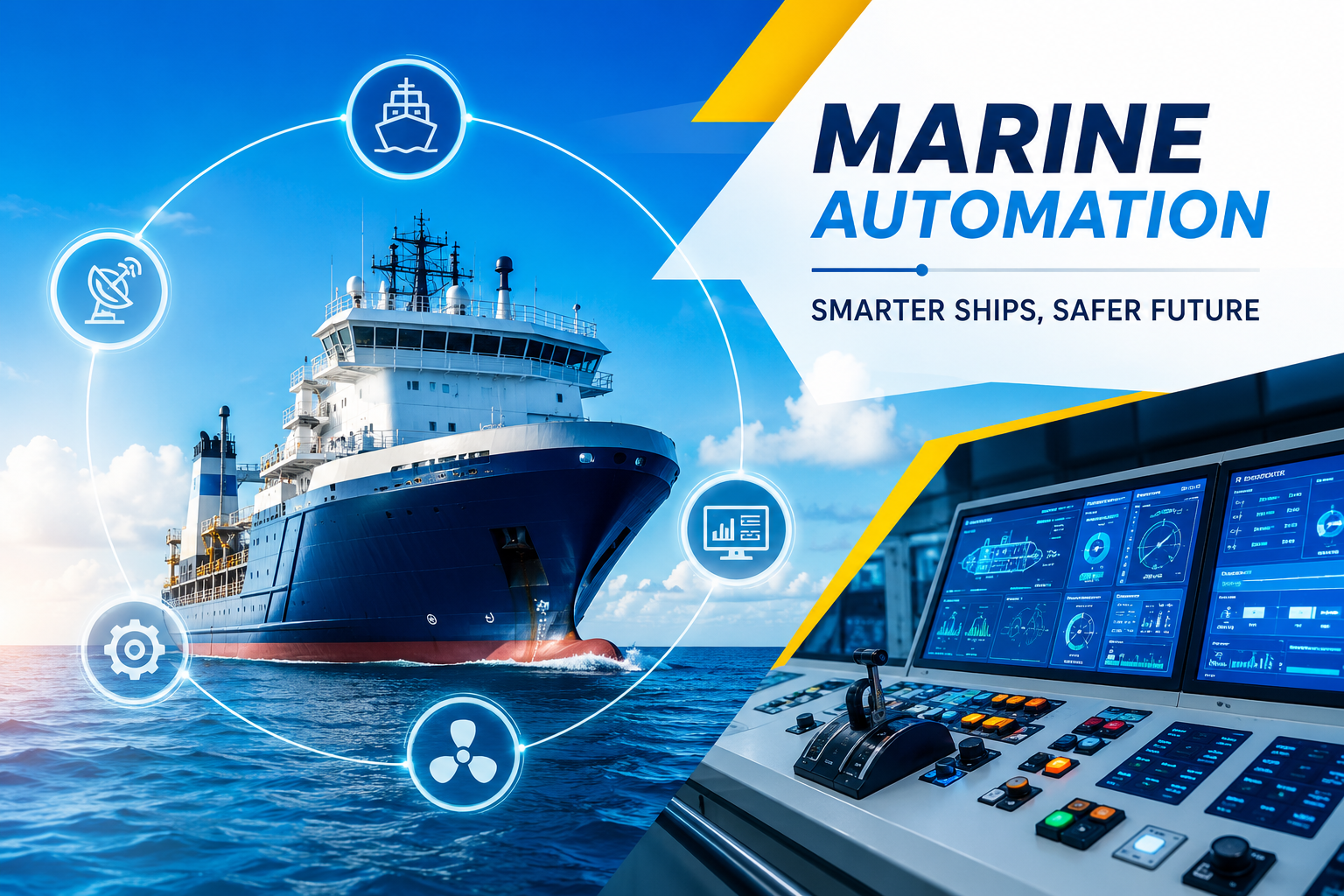
Imagine a Ship Stopping in the Middle of the Ocean…
A cargo ship carrying millions worth of goods is traveling through rough seas. Suddenly, a critical engine system fails.
No warning.
No early alert.
No backup action.
The result? Massive financial losses, delays, safety risks, and operational chaos.
Now imagine the same ship equipped with an intelligent automation system.
Before failure even happens, sensors detect abnormal conditions, alarms are triggered, engineers receive alerts, and corrective actions begin automatically.
That is the power of Marine Automation.
In today’s modern shipping industry, automation is no longer a luxury—it has become a necessity. Smart vessels, automated monitoring systems, and intelligent marine controls are transforming the maritime industry faster than ever before.
If you are planning a career in the marine sector, understanding marine automation could be your gateway to a high-demand global career.
What is Marine Automation?
Marine automation refers to the use of advanced control systems, monitoring technologies, sensors, PLCs, and intelligent devices to automate operations inside ships and marine vessels.
Instead of depending completely on manual operation, modern vessels use automated systems to monitor and control:
- Engine Room Operations
- Power Management Systems
- Navigation Support Systems
- Fuel Monitoring Systems
- Alarm & Safety Systems
- HVAC Control
- Pump Automation
- Cargo Handling Systems
- Electrical Distribution Systems
Simply put, marine automation makes ships smarter, safer, and more efficient.
Why Marine Automation is Becoming Essential
The maritime industry is rapidly moving toward digital transformation.
Modern shipping companies want:
Better Safety
Automation minimizes operational risks by continuously monitoring vessel performance.
Reduced Downtime
Predictive maintenance helps identify problems before breakdowns occur.
Fuel Efficiency
Smart control systems optimize fuel consumption, reducing operational costs.
Remote Monitoring
Engineers and operators can monitor systems in real time.
Compliance with International Standards
Marine automation helps vessels meet strict safety and environmental regulations.
As shipping industries continue modernizing, demand for marine automation professionals is increasing significantly.
Technologies Used in Marine Automation
Marine automation combines electrical, electronics, instrumentation, and software technologies.
PLC-Based Control Systems
Programmable controllers are used to automate pumps, motors, engine systems, and vessel processes.
Popular automation brands used in marine industries include:
- Siemens
- ABB
- Schneider Electric
- Mitsubishi Electric
- Omron
SCADA & Monitoring Systems
Marine control systems allow real-time monitoring of vessel operations.
VFD (Variable Frequency Drives)
Used for efficient motor speed control in pumps, compressors, and propulsion support systems.
Sensors & Instrumentation
Pressure, temperature, flow, and level sensors continuously monitor vessel performance.
Alarm Monitoring Systems
Critical systems instantly trigger alarms during faults or emergencies.
The Rise of Smart Ships
The future belongs to smart ships.
Modern vessels are increasingly integrating:
- Artificial Intelligence (AI)
- IoT-Based Monitoring
- Remote Diagnostics
- Predictive Maintenance
- Smart Navigation Systems
- Digital Twin Technology
Shipping companies now prefer vessels that can optimize performance automatically while reducing human intervention.
This trend is creating a major demand for skilled marine automation engineers.
Career Opportunities in Marine Automation
Marine automation is opening doors to exciting careers both in India and internationally.
You can work as:
- Marine Automation Engineer
- Marine Electrical Engineer
- PLC Programmer for Marine Systems
- Commissioning Engineer
- Service Engineer
- Marine Control Systems Engineer
- Ship Maintenance Engineer
- Marine Instrumentation Engineer
Professionals in marine automation can find opportunities in:
- Shipyards
- Cargo Ships
- Cruise Ships
- Offshore Platforms
- Marine Equipment Companies
- Ports & Harbours
- Oil & Gas Marine Operations
Countries in the Middle East, Europe, Singapore, and offshore industries are actively hiring marine automation professionals.
Why Marine Automation Skills Matter Today
Here’s a reality many students don’t know:
Traditional electrical and electronics skills alone are often not enough in today’s marine industry.
Companies increasingly look for professionals with practical knowledge in:
- PLC Programming
- Industrial Networking
- Marine Electrical Systems
- VFD Configuration
- Sensors & Instrumentation
- Troubleshooting & Diagnostics
Candidates with automation skills often stand out during hiring.
Why Learn Marine Automation?
If you are an:
- Electrical Engineering Student
- Electronics Student
- Diploma Holder
- ITI Candidate
- Marine Engineering Aspirant
- Working Professional
Learning marine automation can significantly improve your career opportunities.
It combines electrical engineering + automation + marine technology, making it one of the most future-ready technical skills.
The Future of Marine Automation
The maritime industry is entering a new era.
Autonomous vessels, intelligent monitoring systems, and AI-powered diagnostics are becoming reality.
Ships are becoming more connected, smarter, and safer.
As the world moves toward smarter marine transportation, skilled marine automation professionals will continue to remain in high demand.
The question is no longer:
“Is marine automation important?”
The real question is:
“Are you ready for the future of smart ships?”
Final Thoughts
Marine automation is revolutionizing the maritime industry by improving safety, efficiency, reliability, and performance.
For students and professionals looking to build a rewarding technical career, marine automation offers excellent growth opportunities in both domestic and international markets.
At ELINAUT Institute of Technology, students can gain practical industry-oriented skills that align with real industrial and marine requirements.